


Understanding the Features and Settings of a CPAP Machine
- Feb 10, 2026
Understanding the Features and Settings of a CPAP Machine
A comprehensive guide to what a CPAP machine is, how it works, and how it can work for you
Whether you’re just beginning CPAP (continuous positive airway pressure) therapy or you’re looking to achieve better sleep as an experienced CPAP machine user, knowing all of the features, benefits, and settings that your machine has to offer is a great place to start.
Why CPAP?
Although CPAP machines entered residential use in the early 1980’s, there’s still quite a bit of confusion about what they do and how they work. Most people find that their CPAP knowledge is limited to memories of watching their parents or grandparents fill up a tank with water and attach it to a small device on their nightstand. And with the American Medical Association estimating that 20 to 25 million Americans are living with undiagnosed sleep apnea, it’s more important than ever for information on the many benefits of sleep therapy to be available.
Decreased Snoring
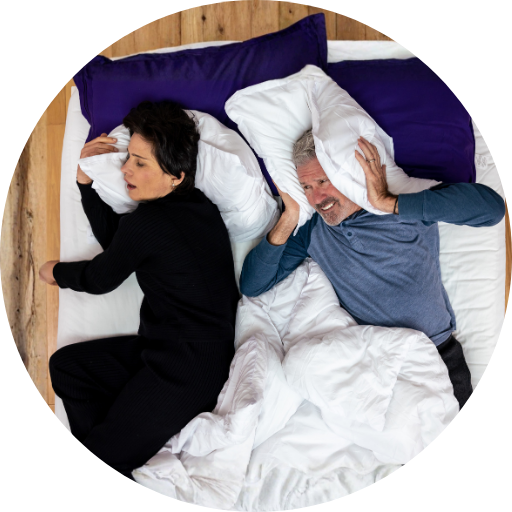
For many CPAP users with Obstructive Sleep Apnea (OSA), their sleep therapy journey began with their healthcare provider ordering a sleep study or home sleep test following complaints of snoring from either the patient or the patient’s bed partner. And while common, snoring indicates that airflow is being blocked somewhere in your nose and/or throat.
By delivering a steady flow of air pressure that keeps the airway open while you sleep, CPAP therapy addresses the issue as its source, effectively eliminating or reducing snoring.
Improved Sleep
CPAP and APAP (auto-adjusting positive airway pressure) machines help to improve sleep quality by preventing apneas (pauses in breathing) and hypopneas (shallow breathing) which cause micro-awakenings throughout the night. The ability to sleep soundly and continuously can improve cognitive function, mood, and overall health.
Reduced Daytime Fatigue
While Obstructive Sleep Apnea, Central Sleep Apnea, and Complex Sleep Apnea are all very different diagnoses, daytime sleepiness and fatigue are symptoms that they all share. Sleep Apnea can disrupt hormones that regulate metabolism and energy which can contribute to obesity, decreased energy levels and even the “brain fog” that many sleep apnea patients report feeling. Brain function, alertness, and energy levels are all supported by effective treatment with a CPAP machine.
Lower Risk of Heart Problems
If left untreated, sleep apnea increases the risks of high blood pressure, arrhythmias, stroke, and even heart attack.
Correct and consistent use of a CPAP machine helps to lower cardiovascular risk by stabilizing oxygen levels and reducing strain on the heart by preventing dangerous spikes in blood pressure caused by repeated drops in oxygen.
Limited Side Effects
Unlike many medical treatments in medicine today, there are very few downsides to CPAP therapy. Most CPAP users find that the few potential side effects of CPAP treatment are typically worth the numerous benefits. The most commonly reported side effects are aerophagia (swallowing of air), dry mouth,headache, and claustrophobia. All of these side effects can be managed, treated, or even corrected for most users by scheduling a quick follow up with your healthcare provider or sleep specialist to discuss treatment options.
How Do I Know Which CPAP Machine to Choose?
Start With Your Prescription
The very best place to start when selecting a CPAP machine is the prescription that your doctor’s office provides after they’ve considered your medical history, reviewed your sleep study results, and decided that CPAP therapy is the best course of action. Your prescription will either state that you need:
• “Auto CPAP” and a range of two pressure settings should be included (e.g., “4 to 20cmH20”)
• “BiPAP” or “Bilevel” machine with two different settings for inhalatory and expiratory (e.g.,”IPAP: 10, EPAP: 16”)
• “CPAP” with one fixed pressure setting (e.g., “12cmH20”)
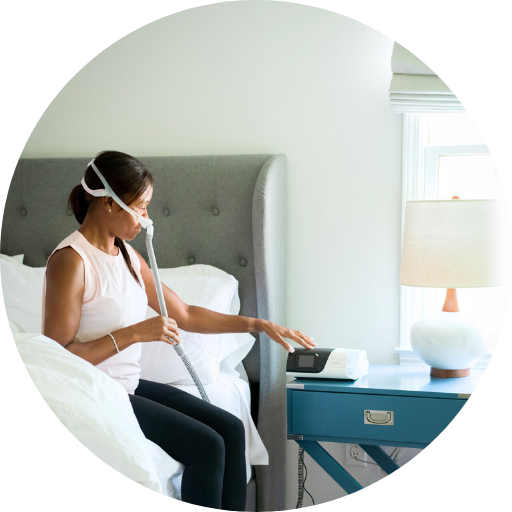
Consider Your Individual Needs
CPAP machines include many features and come in various sizes and weights. When deciding on a CPAP device, there are a few key things to keep in mind:
• Do you need a travel CPAP machine that can be used on-the-go?
• If you’re someone who’s tech savvy, would you prefer to have a machine with bluetooth and/or cellular connectivity, as well as a smartphone application?
• Would you like your machine to include the option for heated tubing?
• Do you hope to track your therapy success each morning using an easy-to-read LCD display screen?
Selecting a CPAP machine that best accommodates your individual requirements, financial abilities, and lifestyle will give you more of an advantage when beginning treatment. It takes the average person between 1 and 3 months to become fully comfortable with their sleep therapy but it can take much longer for a user whose machine fails to meet their needs.
How Will Your Machine Be Paid For?
For many newly diagnosed sleep apnea patients, the thought of purchasing new equipment can be daunting. Typically, insurance will cover a portion or more of new setup costs but when working with insurance, remember that you’ll be subject to compliance requirements no matter where you purchase your equipment or what company/type of insurance you have.
Insurance will only cover the cost of your machine and supplies as long as you’re compliant with treatment; if you use your machine for a minimum of 4 hours each night. But keep in mind that insurance doesn’t cut you any slack for reasons like traveling, trouble adjusting to treatment, being sick, etc. If you’re not compliant, insurance can stop paying for your device and if so, you’ll have to start the process over.
For sleep apnea patients who don’t want to use their insurance due to compliance requirements, are without insurance altogether, or have insurance that lacks CPAP coverage, there are plenty of e-commerce (retail) CPAP supply dealers that are able to sell CPAP machines, supplies, cleaning accessories, and comfort items at out-of-pocket pricing. CPAP machines are available through US dealers from anywhere between $400 to $2,500 depending on your preferences, your needs, and the supplier you choose to work with. HSA and FSA can usually be used towards the cost of your supplies.
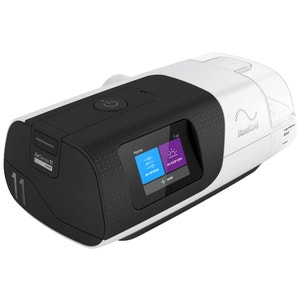
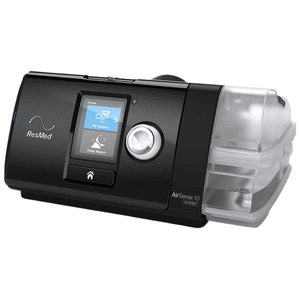
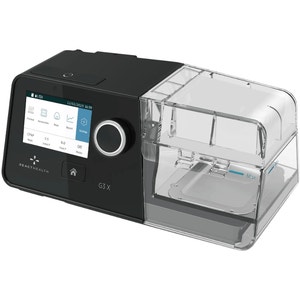
Check out just some of the top-rated machines we offer!
-
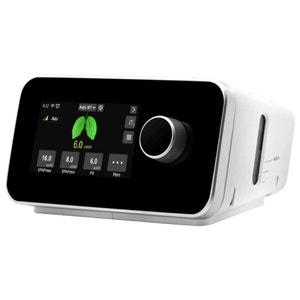
 Resvent iBreeze Auto CPAP Machine with Heated HumidifierSpecial Price $340.00 Regular Price $570.00
What Supplies and Parts Will Be Included With My Machine?
There are 3 types of CPAP machines available today: BiPAP (Bilevel Positive Airway Pressure), APAP (Auto-adjusting Positive Airway Pressure) and CPAP (Continuous Positive Airway Pressure) and each is designed to deliver pressurized air in various ways in order to treat varying types and severities of sleep disorders. But all 3 machine types will require the same parts and components to function properly.
Humidifier
A humidifier is a built-in component of your CPAP device that adds humidity to the pressurized air as it passes through the humidifier’s water reservoir to your tubing and CPAP mask. Most CPAP humidifiers are also able to warm the machine’s airflow through a metal conductor plate that sits beneath the water reservoir (humidifier chamber). Humidity isn’t a required part of treatment and levels can be set to “0” on most machines but humidification is strongly recommended to assist with issues such as eye dryness, nasal congestion, treatment discomfort, throat irritation, and dry mouth.
Filter
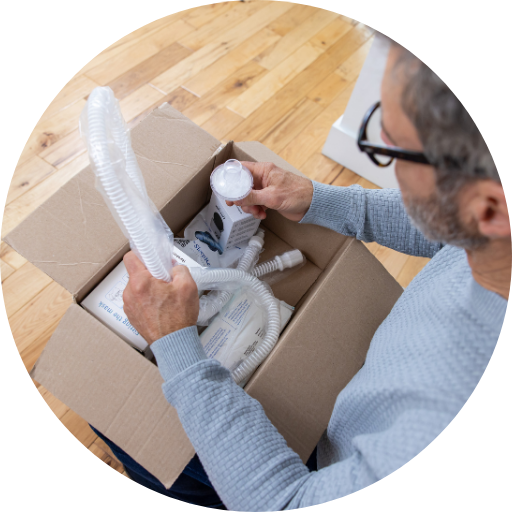
One of the 3 components that are automatically included with your machine is a small, replaceable filter that cleans the air entering your CPAP machine before being allowed to enter your lungs. Disposable and non-disposable filters are available for most CPAP machine models and both prevent contaminants such as pollen, dust, allergens, and other tiny particles that cause sore throat, soreness of the sinuses, increased allergy issues and more.
Hose / Tubing
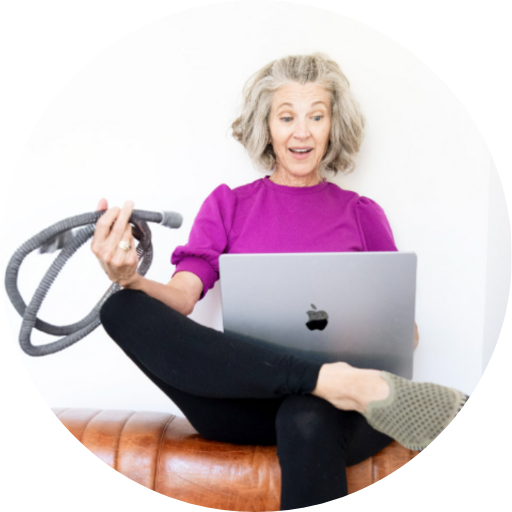
As with the humidifier chamber and filter, a CPAP tube (hose) will also come with your CPAP device. CPAP tubes are made of a flexible, lightweight plastic with silicone end connectors that create tight seals around both the mask connector and the machine’s air outlet port to prevent air leaks. Tubing is available in both heated and standard (non-heated) options and can be purchased in various lengths anywhere from 2 to 10 feet in length to accommodate each user’s sleep position, room layout, and personal preference.
Power Supply
Like any other electronic device, your CPAP machine will require a constant source of power in order to run, so a power supply will be included in your initial setup. The power supply includes an AC power cord which runs from your wall outlet or power source to the power brick in the center of the cord. From the power brick, a DC outlet cable will run to the CPAP machine itself. Important usage information and power requirement details are listed on the manufacturer sticker on the power brick. You can also use this information to figure out what power supplies (batteries) and converters/inverters you’re able to use.
CPAP Masks
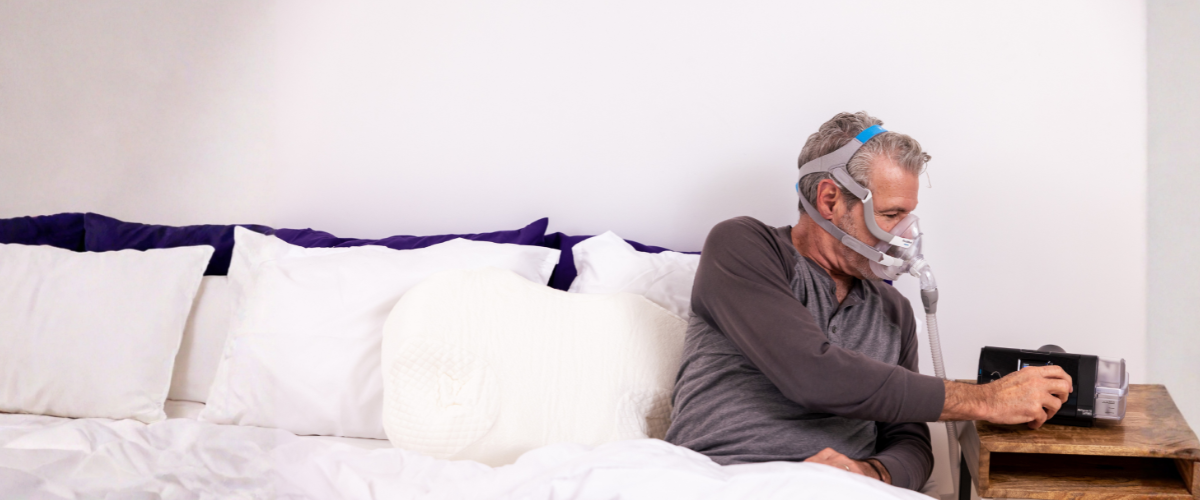
Your machine’s pressurized air is delivered through a CPAP mask which is often mistaken for an oxygen cannula.
Unlike oxygen cannulas, CPAP masks feature headgear straps and silicone cushions/pillows that create strong seals to withstand a user’s breathing patterns, pressure levels, and sleep position.
Selecting the right type of mask will not only promote effective treatment but will help you to avoid issues such as air leaks, skin irritation, mouth dryness, and the need to start over by selecting a different mask.
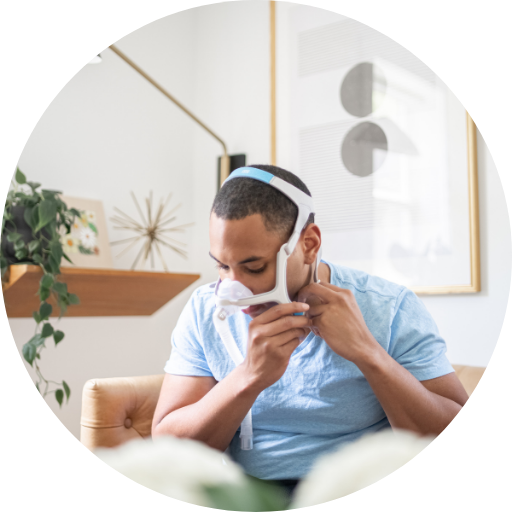
Most CPAP masks are made up of 3 parts:
1. Headgear: Headgear is typically made of silicone, neoprene, cotton or a blend of materials. Depending on the type of mask, the headgear may have some elasticity or it may be more rigidly designed. For instance, under-the-nose nasal masks and nasal pillow masks tend to include only a single elastic band while full face masks require headgear with more structure and multiple mask frame connection points. But they all serve the same purpose; to secure the cushion/pillow to the nose or mouth, so that mask leaks don’t occur.
2. Frame: A CPAP mask’s frame never looks the same from mask to mask but it always performs the same function; to be the piece that the cushion/pillow, headgear, and sometimes even the tubing can connect to. Frames are typically made of plastic or silicone and will often include the mask’s exhalation port and tubing elbow.
3. Cushion or Pillow: The cushion/pillow is the most complex component of the CPAP mask and is likely the most important thing to consider when deciding if a mask fits both your face and needs.
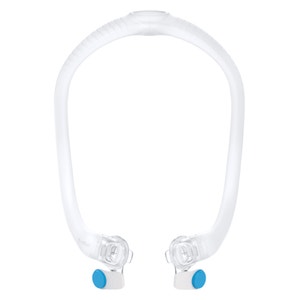
• Nasal pillow masks have nasal pillows or “prongs” as they’re often referred to. These pillows sit up against or just inside of the nasal cavern to form a seal, depending on the design of the mask.
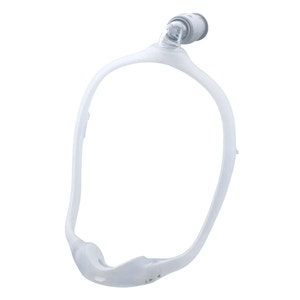
• Nasal masks include nasal cushions that sit over the nose or under the nose to fully seal off the nostrils without sitting inside of the nostril itself.
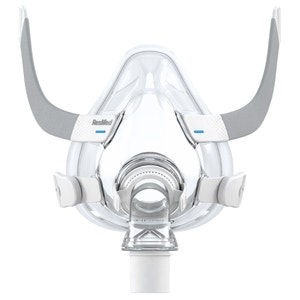
• Full face masks have a larger cushion that always sits over the mouth but depending on the specific mask design, can sit over or under the nose, so long as both the nose and mouth openings are sealed.
Check out just a few of the top-recommended CPAP masks we offer!

Customizing Your Treatment
A recent article published to the National Library of Medicine states that nearly 21% of diagnosed sleep apnea patients will decide to discontinue treatment within 6 months of completing their sleep study and beginning treatment. In nearly 90% of those instances, treatment is abandoned when users experience issues that have fairly simple solutions. The issues that many patients see as deciding factors include difficulty or discomfort with their mask, trouble tolerating treatment, and lack of support, education, or follow up by their physician. Many users are unaware that their CPAP device is equipped with customizable comfort options that can completely change the way they receive treatment!
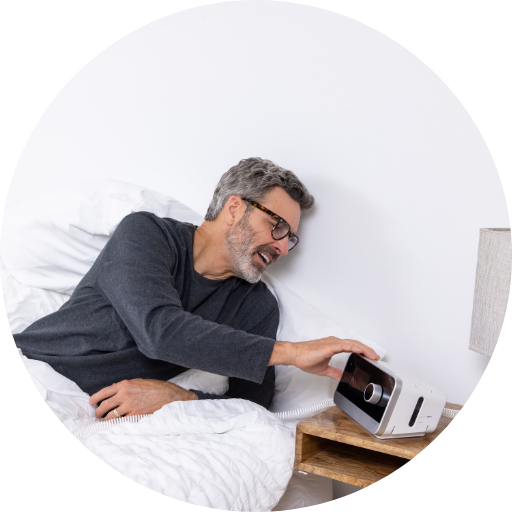
Pressure Settings
Just like antibiotics or blood pressure medication, your healthcare provider will need to prescribe specific pressure settings that cater to your medical history, physical requirements, and your sleep study or home sleep test results.
So, what are CPAP pressure settings? They’re a number or set of numbers that determine the amount of pressurized air you produced by our CPAP.
Your prescribed air pressure level(s) will depend on numerous factors including the type of CPAP machine that your healthcare provider feels you’ll benefit most from.
If you feel that you need a lower pressure or that you need to increase to a higher pressure, reach out to your physician to discuss your treatment concerns.
Types of Pressure Settings
1. CPAP
CPAP machines are the base level device of CPAP therapy. This type of machine can only be set to one fixed inhalatory pressure setting. Most CPAP machines can be set as low as 4cmH20 (centimeters of water pressure) and as high as 20cmH20.
When is a CPAP machine needed?
Standard CPAP machines are typically prescribed for users with a mild case of sleep apnea or for those with sleep study results that show a need for one one consistent pressure throughout the night.
2. APAP
Auto-titrating CPAP machines are used mostly by sleep apnea patients who are either unable to adjust to a standard CPAP machine or require different pressure levels throughout the night due to REM sleep-related issues or a frequent change in their sleeping position.
3. Bilevel
Bilevel (BIPAP) machines are programmed to a set of two pressure settings, one inspiratory and one expiratory. The inhalatory (IPAP) setting will range from 4cmH20 to 25cmH20 and the expiratory (EPAP) setting will range from 4cmH20 to 20cmH20.
When is a BiPAP machine needed?
BiPAP machine pressures are typically needed when the user has a more complex case of sleep apnea stemming from obesity, chronic respiratory issues, or neurological issues. In rare cases, a BiPAP machine may also be prescribed for users who have not benefited from auto-adjusting (APAP) or fixed pressure (CPAP) devices.
Humidification
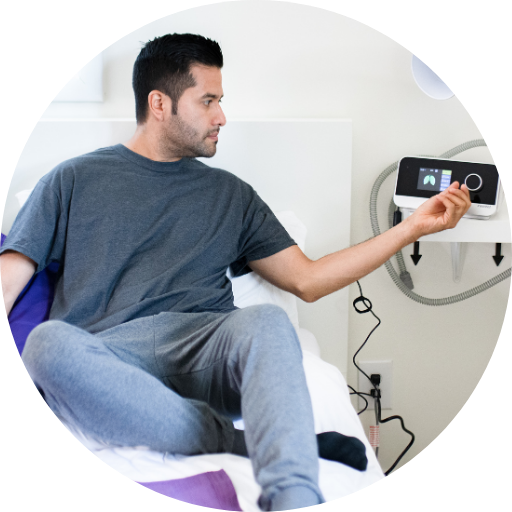
By the mid to late-1990’s, manufacturers such as Resmed began to introduce CPAP devices with built-in humidifiers instead of separate, external units. Since then, humidification is a key part of CPAP therapy. However, a CPAP machine’s default humidification levels can be overwhelming for some users depending on where they live, their personal preference, and the type of mask they use. But the great news is that the option to adjust the humidification of your device’s airflow higher, lower, or even off is included in the menu of every standard CPAP, APAP, and BiPAP machine currently on the market.
Temperature
One of the newer personalization options included in CPAP machines is the temperature feature. While heated tubing has been around for quite some time, the user now has the option to personalize their tubing’s output.
For instance, every standard CPAP, APAP, and BiPAP machine that Resmed has manufactured in the last decade includes “Climate Control”. Through the Climate Control feature, the user is able to adjust both the humidity and the tube temperature. Tube temperature that is set too high can lead to the water reservoir (humidifier chamber) emptying too soon and becoming dry before the night is through. High temperature can also cause excessively dry airflow that can irritate the airways and can cause headaches, sore throats, and even inflamed sinuses.
Tube temperatures that are set too low often result in rainout (a build-up of condensation in the mask cushion that can literally drip down your face and neck) and even cause some of the same issues caused by high temperatures, such as headaches, dryness in the mouth, and sore throat. It’s important to find your “Goldilocks” setting and nearly all modern CPAP machines allow you to do just that!
Ramp
Nearly every CPAP, APAP, and BiPAP machine will have a ramp feature. This feature is a comfort setting and works by slowly increasing the amount of pressurized air your machine puts out from the lowest level to the level that is prescribed by your physician to keep the pressure from being overwhelming and intolerable.
Ramp settings are adjusted by time, so if your ramp setting is low, that means the amount of time from the lowest pressure to your set pressure is going to be very short and quick. The higher the ramp number, the longer and more gradual the time from the lowest possible pressure the machine offers to the pressure your machine will remain at for the night.
What This Means for Your Sleep Apnea Treatment
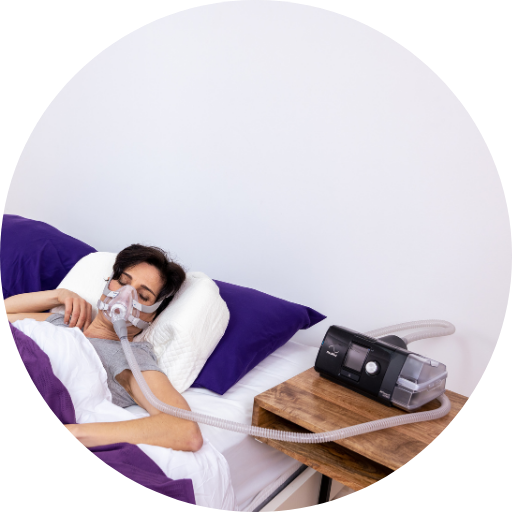
The list of CPAP therapy benefits is continually growing as medical technology advances and CPAP machines are in more homes than ever before. There’s a seemingly endless supply of CPAP-related information on the internet but your sleep specialists, healthcare providers, and CPAP dealers are your most trusted sources of information.
Please don’t hesitate to reach out to a member of your care team with any questions you have regarding potential or existing treatment questions related to your machine or your ability to use your machine comfortably.
Get Your Perfect CPAP Setup with Guided Shopping Feature