


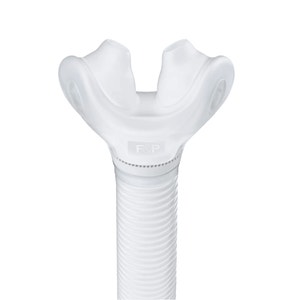
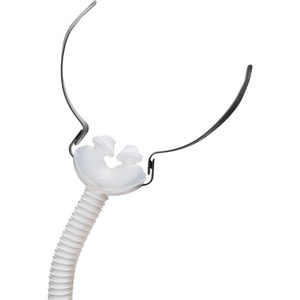
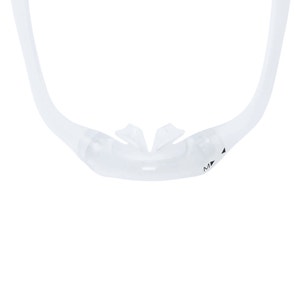
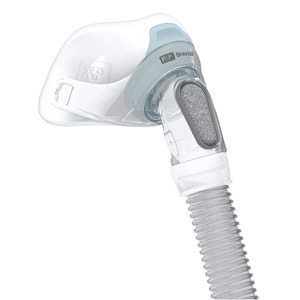
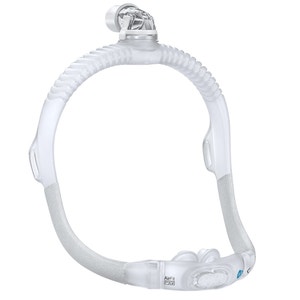
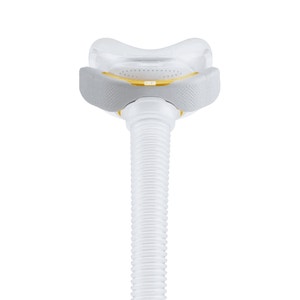
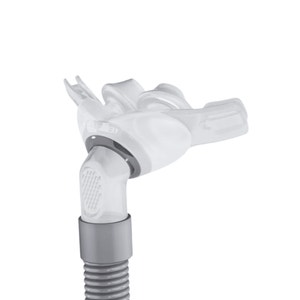
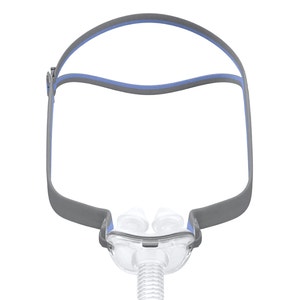
Nasal pillow CPAP masks cradle underneath your nose, with two small “pillow” cushions that rest just inside your nostrils. The pillows inflate slightly to create a secure yet comfortable mask fit.
A nasal pillow mask’s minimalist design provides a wider field of vision and less headgear than full face CPAP masks. And unlike traditional nasal masks, which tend to rest on top of the nose, nasal pillow masks don’t cover the bridge of your nose. This makes them ideal for CPAP users who experience claustrophobia, or just don’t like the feeling of a bulky mask.
Who Are Nasal Pillow CPAP Masks Ideal For?
Sleeping Position:
-
Side Sleepers
-
Back Sleepers
-
Stomach Sleepers
-
Active Sleepers
Breathing Style:
-
Nose Breathers (or mouth breathers when paired with a chinstrap)
Additional Considerations:
-
Glasses Wearer
-
Facial Hair
-
Low to Mid Pressure Settings
-
Minimal Contact
-
Claustrophobia
There may be more key factors you should consider (such as if you are a mouth breather, require higher pressure setting, and/or experience frequent nasal congestion) that might lead you to consider a different mask type. Consulting with your sleep specialist or healthcare provider is highly recommended.
-
Why Choosing the Best Mask Fit is Key
Making certain you find an optimal, comfortable fit for your CPAP mask plays a significant role in the effectiveness, safety, compliance, and overall experience of your sleep therapy. Establishing a secure mask seal prevents pressurized air from leaking between your face and your nasal pillow, promoting steady airflow to your upper airway. This helps to eliminate side effects caused by a poorly fit CPAP mask, such as skin irritation, dry eyes, nasal congestion, discomfort, and reduced CPAP therapy effectiveness.
Find more information on the importance of properly fitting your CPAP mask with this helpful blog or our CPAP Mask Fit Guide.
How Do I Choose the Correct Nasal Pillow Size?
- Nasal Pillow Sizing Guides: Use our helpful Mask Sizing Guide Directory to view, download, and print out any available nasal pillow sizing guide PDFs we have listed. These guides include instructions, tips, and diagrams for finding the perfect nasal pillow size for you.
- Fit Packs & Starter Kits: Many of the CPAP masks we carry are made available in fit packs or starter kits that include multiple nasal pillow sizes within the setup pack, allowing you the opportunity to try on each nasal pillow size to determine the most comfortable and secure fit for your needs.
Here is a link to view our selection of CPAP Mask Fit Packs & Starter Kits.
Find Your Mask
Take advantage of our Find Your Mask feature and get a specialized recommendation from our wide selection of options for the best available CPAP mask customized to meet your needs.
Is a Nasal Pillow Mask the Same As a Nasal CPAP Mask?
No! A traditional nasal cushion mask system typically rests over the top of your nose, though newer designs may cradle underneath it. In either case, the airflow from your CPAP machine is delivered to the nasal area, but not directly inside it.
A nasal pillow mask uses two soft pillows to deliver airflow directly into the nostrils. These pillows inflate gently to form a gentle but secure seal.
Nasal pillow masks are often lighter than other types of mask, and offer less contact with your face.
Common Nasal Pillow CPAP Mask Materials
-
Silicone Nasal Pillows: Soft and flexible, silicone nasal pillows are highly responsive to sleep position changes throughout the night.
-
Gel Nasal Pillows: Providing a more firm cushion option, gel nasal pillows maintain their shape while adapting to your unique facial shape and contours, making them ideal for higher pressure settings.
-
How to Clean a Nasal Pillow CPAP Mask
Even though the nasal pillow mask makes less contact with your face, it’s still important to clean it just as often as any other type of mask. This will help prevent the buildup of germs that may cause skin irritation.
Before following the instructions below, first make sure your CPAP machine is unplugged from the power source, disconnect your mask and air tubing from your CPAP machine, and disassemble your mask components into 3 parts (nasal pillows, headgear, and frame):
Part Cleaning Frequency Instructions Nasal Pillows
Daily
- Using a mild detergent* and warm, drinking-quality water, gently clean your nasal pillows to remove any dirt, debris, and oils. Vinegar solutions (3:1, water:vinegar mix) can be used by soaking for 30 minutes to kill accumulated bacteria.
- Rinse thoroughly.
- Allow to air dry, avoiding direct sunlight.
Mask Frame
Weekly
- Using a mild detergent* and warm, drinking-quality water, gently clean your mask frame to remove any dirt, debris, and oils. Vinegar solutions (3:1, water:vinegar mix) can be used by soaking for 30 minutes to kill accumulated bacteria.
- Rinse thoroughly.
- Allow to air dry, avoiding direct sunlight.
Headgear
Weekly
- Using a mild detergent* and warm, drinking-quality water, gently clean your mask headgear to remove any dirt, debris, and oils. Do not use a vinegar solution.
- Rinse thoroughly.
- Hang dry, avoiding direct sunlight.
Chinstrap
Weekly
- Using a mild detergent* and warm, drinking-quality water, gently clean your mask chinstrap to remove any dirt, debris, and oils. Do not use a vinegar solution.
- Rinse thoroughly.
- Hang dry, avoiding direct sunlight.
*Avoid using strong detergents or soaps, especially those that contain harsh chemicals, perfumes, dyes, moisturizers, or alcohol.
You can find more useful information regarding CPAP cleaning with this blog:
CPAP Replacement Schedule
Over time your nasal mask pillows can develop microcracks, your CPAP mask frame can bend, and your headgear can stretch out. These, among other issues, can lead to a poor mask fit and air leaks. To keep your sleep apnea therapy comfortable and effective, it’s important to regularly replace your CPAP supplies.
Below is a helpful CPAP equipment resupply schedule:
- Nasal Mask Pillows — Every 2 weeks
- Mask Frames — Every 3 months
- Headgear — Every 6 months
- Chinstraps — Every 6 months
- CPAP/BiPAP/Auto-PAP Machines — 5 years
For more helpful information regarding replacing your CPAP device, mask parts, and other CPAP accessories, check out this helpful blog.
Do CPAP Masks Require a Prescription?
Many of your favorite CPAP masks are available prescription-free thanks to our convenient non-RX CPAP mask kits! However, a fully assembled CPAP mask with headgear (including Fit Packs and Starter Packs) or any masks purchased through insurance do require a current prescription from a licensed healthcare provider (such as your Sleep Specialist).
If you need help obtaining or updating your prescription, we can help! Simply email us at info@cpapsupplies.com with your request.
30 Day Mask Guarantee
Choose your next mask with confidence with our 30-day guarantee on new CPAP masks. If you’re not fully satisfied with your purchase, you’ll get the full amount towards a new mask.
Learn more about our 30-Day Mask Guarantee.